


Homicide cases often go cold. Ohio students are 'defrosting' them
Listen to this Episode
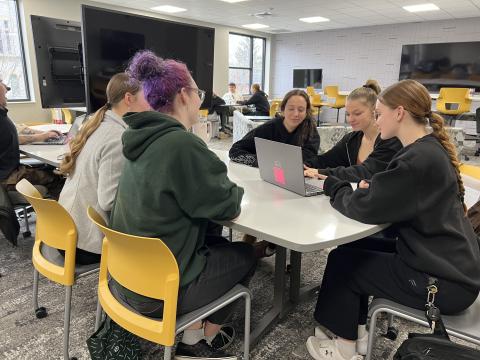
On a Friday at Tiffin University, a classroom is abuzz with students. Dozens file in, chatting about their spring break plans and upcoming exams.
But instead of settling in for a lecture, the students dive into an investigation.
"Today, we're mostly going over our suspectology and trying to get a good grasp on the different peoples of interest that we have," one student.
Around half of murder cases in the United States go unsolved, leading to a large backlog of cold cases. With limited resources to investigate, some Ohio agencies are looking to students to defrost them.
Around 80 students are enrolled in Tiffin University's Cold Case Fellowship. They sift through hundreds of pages of real police reports, witness testimonies and autopsies – in hopes of getting a new lead on cases that have sat unsolved for decades.
"I tell law enforcement it's like fresh eyes, true fresh eyes who really really really want to help," said Michael Curtis, former police officer and director of the fellowship program.
Expanding capacity
Unsolved homicide cases hit record-highs in recent years. More than 2,500 unsolved murders are listed on the Ohio Attorney General's Cold Case Unit database alone.
It's not due to apathy or incompetence, Curtis said. It's due to resources.
For small towns, there's often not enough staff. In bigger cities, homicide cases are more common – and allocating time for cold cases can come at the expense of investigating current crimes, and vice versa.
"We want to help agencies look at these cases that are just sitting there. What else are you going to do with them?" he said.
Training ground for students
Tiffin's fellowship takes them off the dusty shelves and puts them into the hands of students – who determine whether a case is solvable, track the social network of victims and put together dossiers on suspects.
Students also look for DNA evidence that can be retested with new technology.
"What we can recover and what we can have tested is a lot better than it was back in the early 2000s," Curtis said.
When they do uncover a lead, students often head out into the field for interviews with Curtis, where he teaches by example. Students learn what to look for in an interrogation.
"Do they sound credible? … Are they corroborating what they said 15 years ago? Because people forget what they've said 15 years ago," he explained.
All of the information the fellowship students find goes straight back to law enforcement agencies.
A potential model
Cold case programs, like Tiffin's, are pretty rare. But, other colleges, like Southern Illinois University in Edwardsville, have seen success too.
Trish Oberweis leads the university-police partnership at SIUE. She said in the four years since they've launched, they've become a force multiplier for regional departments.
"Our collaboration has triggered the identification of three Jane Does from more than 20 years ago. We have secured charges against one offender in one of the homicides," she said.
Curtis said Tiffin's cold case program is the only one he's aware of in Ohio and demand for participation is high. The fellowship has gone from 6 to 80 students in around three years.
But, Curtis is clear: This isn't play-detective. Students have to sign a non-disclosure agreement and undergo a rigorous process to be selected to participate.
"This isn't 'CSI Tiffin,'" Curtis said. "This is like an academic professional enterprise."
Real impact
Most importantly, he said, students need to remember these aren't just looking at case files. Real families are impacted. Some of which have been looking for answers for decades.
Danielle Allen advocates for the family of Danny Violette, a Huron County teenager who died of asphyxiation in 1998. Allen said the cold case fellowship has led to new leads in a more than 25-year old case.
"We weren't getting anywhere, you know?," she said. "Then to walk into a room and see 40 educated college students pouring over this file, it's hard to even put in words what that means, to have that much attention and that much focus – which Danny has deserved all this time."
That's exactly why junior Alexandrea Welshans wanted to join the fellowship. She'd love to be able to solve the case, but she sees any new lead or piece of evidence as a victory.
She's content knowing it can make more families feel seen.
"I want to bring justice or at least try to bring a little bit more light to a case where people may never have gotten answers to," she said. "We still care. People still care."